
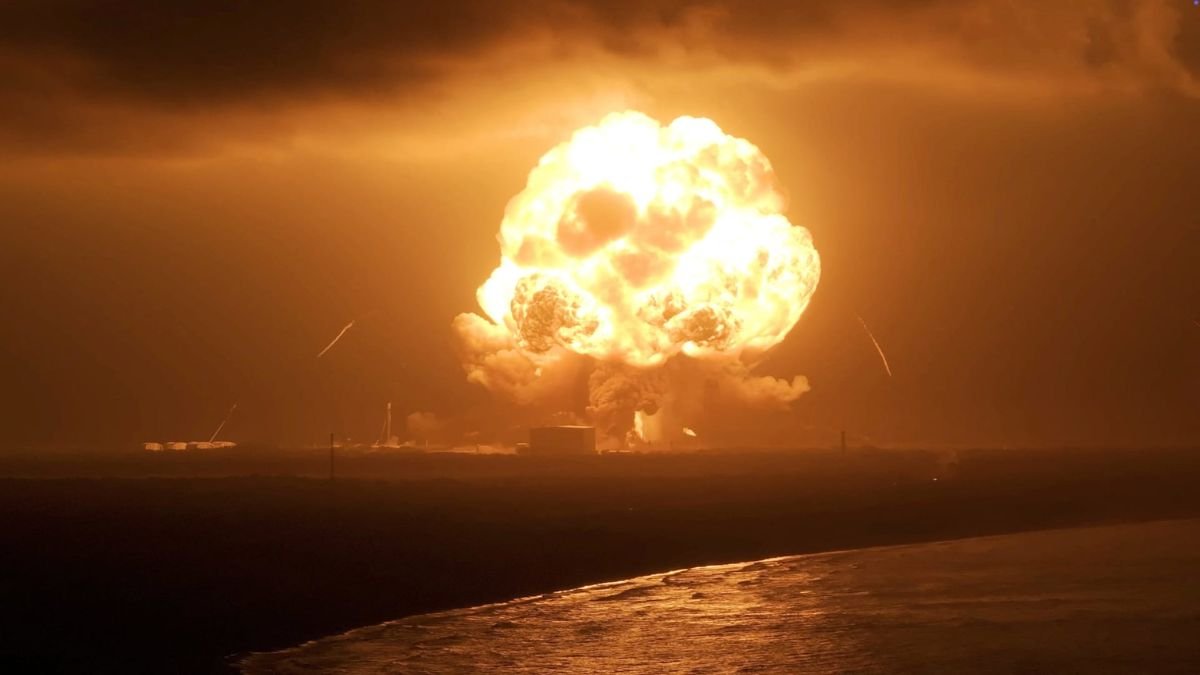
The launchpad damaged during Blue Origin’s recent New Glenn rocket explosion may require several years to fully recover, according to NASA Administrator Jared Isaacman.
Speaking during an interview with CNBC on Monday, Isaacman indicated that a complete restoration of the facility could extend into 2028, highlighting the significant challenges involved in rebuilding critical launch infrastructure following a major accident.
New Glenn Test Ends in Explosion
The incident occurred Thursday at a Space Force launch complex in Cape Canaveral, Florida, where Blue Origin was conducting a hot-fire test of its powerful New Glenn rocket.
During the test, the rocket exploded, creating a massive fireball that caused substantial damage to the launchpad.
Blue Origin founder Jeff Bezos later confirmed that all employees and personnel were safe. He described the event as an extremely difficult day for the company but emphasized Blue Origin’s commitment to rebuilding and moving forward.
NASA Evaluating Recovery Timeline
Isaacman explained that restoring the damaged launch facility will require extensive analysis, planning, and reconstruction efforts.
While discussing potential timelines, he noted that a return to operational status by 2028 is a realistic possibility.
According to Isaacman, NASA and industry partners are focused on understanding exactly what caused the explosion before determining the most effective path forward.
Key Recovery Priorities Include:
- Assessing launchpad damage
- Conducting a root-cause investigation
- Providing technical expertise
- Developing a reconstruction strategy
- Returning the facility to operational readiness
Isaacman stressed the importance of helping Blue Origin recover while ensuring future missions can proceed safely.
Leadership Visits Damaged Facility
Following the explosion, Isaacman joined Jeff Bezos and Blue Origin CEO Dave Limp in visiting the damaged launch site.
The group toured the facility and met with employees to discuss the next steps.
Limp later shared an update on social media, confirming that Blue Origin had regained limited access to portions of the launch complex and had already begun developing a rebuilding plan.
Impact on NASA’s Artemis Moon Program
The setback comes at a critical time for NASA’s Artemis program, which aims to return American astronauts to the lunar surface by 2028.
Blue Origin currently holds several contracts supporting the program, including plans to launch an uncrewed version of its Blue Moon MK1 lunar lander using the New Glenn rocket later this year.
The mission requires a launch vehicle capable of transporting significant payload mass, making heavy-lift rocket availability increasingly important.
Isaacman suggested that NASA may need to consider alternatives typically associated with SpaceX’s Falcon Heavy rocket if delays continue.
Heavy-Lift Launch Options Narrow
The space industry currently has only a small number of providers capable of launching extremely heavy payloads.
According to Isaacman, the primary competitors in that category are:
- SpaceX
- Blue Origin
With Blue Origin temporarily dealing with launchpad damage, the industry’s heavy-lift launch capacity has become more limited.
New Glenn was developed to compete directly with:
- SpaceX Falcon 9
- SpaceX Falcon Heavy
- United Launch Alliance’s Vulcan rocket
The launch system is considered a key part of Blue Origin’s long-term strategy in both government and commercial spaceflight markets.
Single Launchpad Creates Additional Challenges
One factor making the recovery particularly difficult is that Blue Origin currently operates only one active New Glenn launchpad.
As a result, the damage has a much greater impact on launch operations than it would for a company with multiple functioning facilities.
Blue Origin is developing another New Glenn launch site at Vandenberg Space Force Base in California, but that project has not yet been completed.
Isaacman noted that NASA has studied historical launchpad rebuild efforts throughout the history of human spaceflight and found that even accelerated recovery projects generally require considerable time.
Commercial Customers Also Affected
The explosion does not only impact NASA missions.
Several commercial customers rely on New Glenn for future launches, including Amazon, which is deploying satellites for its Project Kuiper internet network.
Amazon Faces Important Deployment Milestones
Blue Origin was scheduled to launch 48 Project Kuiper satellites this week as part of Amazon’s effort to build a global low-Earth-orbit broadband network.
Amazon is working toward regulatory deployment targets established by the Federal Communications Commission and plans to begin commercial service later this year.
Project Kuiper is expected to compete directly with SpaceX’s Starlink satellite internet system.
Any delays in New Glenn operations could affect Amazon’s launch schedule and broader constellation deployment plans.
AST SpaceMobile Also Impacted
Satellite communications company AST SpaceMobile is another organization that relies on Blue Origin for future launch services.
Investor concerns surrounding the launchpad accident appeared to affect market sentiment, with AST SpaceMobile shares falling sharply after the incident.
The stock declined significantly following the explosion and continued lower in subsequent trading sessions.
Blue Origin Faces Major Recovery Effort
Although Blue Origin has already begun assessing damage and developing a reconstruction strategy, the company now faces one of the most significant challenges in its history.
With New Glenn expected to play a central role in future NASA missions, commercial satellite deployments, and competition within the heavy-lift launch market, restoring launch capabilities remains a top priority.
Industry observers will be closely watching the investigation and rebuilding process as Blue Origin works to recover from the setback and resume operations.
