
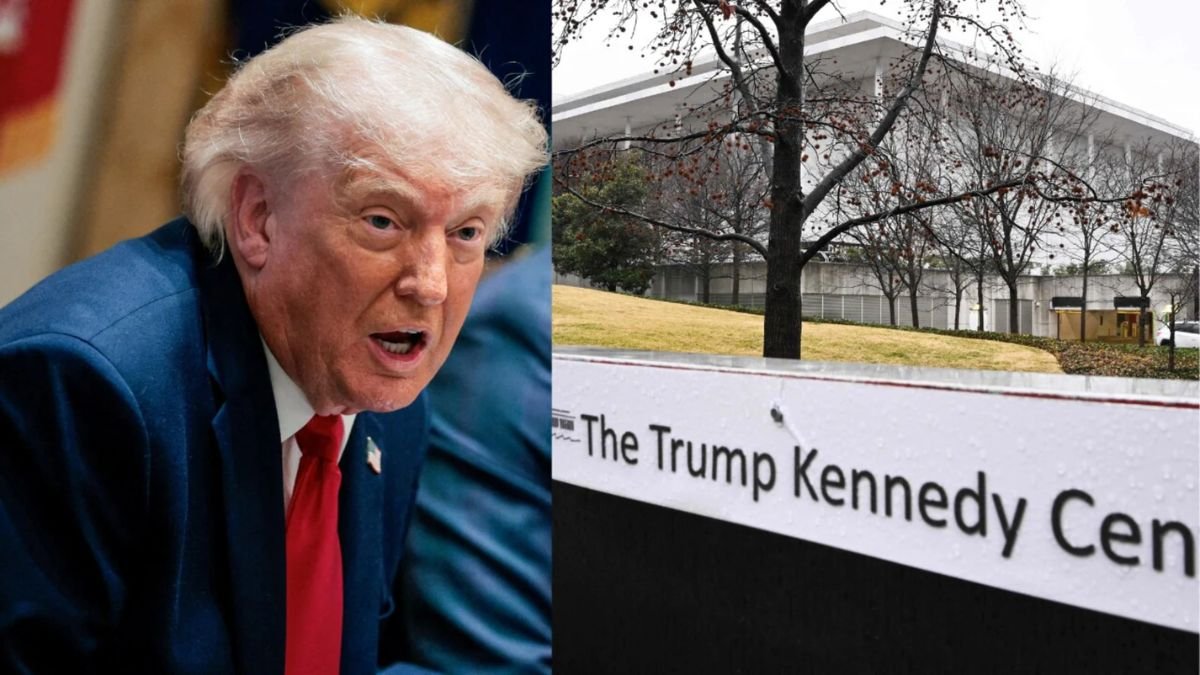
President Donald Trump announced Friday that his administration intends to transfer oversight of the John F. Kennedy Center for the Performing Arts to Congress following a federal court ruling that rejected efforts to rename the institution and halted plans for an extended closure tied to major renovations.
The announcement came shortly after a judge ordered the administration to remove references to the venue under a new name and reaffirmed that only Congress has the authority to change the historic center’s official designation.
Trump Calls for Congressional Oversight
In a post on social media, Trump said he had directed the U.S. Department of Commerce to coordinate with lawmakers and begin arrangements for Congress to assume responsibility for the Kennedy Center’s operations, management, and maintenance.
According to the president, the transfer would place the institution directly under congressional oversight.
However, it remains unclear how such a move would be implemented. The Kennedy Center was established by Congress in 1958 and is currently governed by a board of trustees. During his second term, Trump appointed several political allies to the board.
Federal Judge Rejects Kennedy Center Renaming Effort
The administration’s announcement followed a ruling by U.S. District Judge Christopher Cooper, who determined that the Kennedy Center cannot be formally renamed without congressional approval.
The court concluded that the venue’s founding legislation explicitly identifies it as a memorial to President John F. Kennedy, meaning any official name change would require action from Congress rather than a decision by the board or executive branch.
As part of the ruling, Cooper ordered the administration to:
- Remove physical signage displaying Trump’s name at the venue
- Eliminate references to a “Trump Kennedy Center” from official materials
- Complete those changes within 14 days
The judge emphasized that Congress originally named the institution and therefore holds exclusive authority to alter that designation.
Renovation Closure Also Blocked
The ruling also prevented the administration from moving forward with plans to close the Kennedy Center for approximately two years while extensive renovation work was carried out.
While Cooper acknowledged that the aging facility requires significant repairs and upgrades, he determined that the proposed closure could not proceed under the current plan.
The judge clarified that his decision does not dictate future operational strategies for the institution and does not prevent renovation projects from moving forward in some form.
Instead, the ruling leaves future decisions regarding construction and operations in the hands of the center’s leadership, provided those choices are made independently and in accordance with legal requirements.
Trump Raises Safety Concerns
Responding to the court’s decision, Trump argued that major renovation efforts would be difficult to complete without temporarily closing the facility.
He suggested that keeping the building open during large-scale construction could create safety concerns for visitors and staff.
According to Trump, he could not support a situation where potential public risks are allowed to continue while renovation work is underway.
Lawsuit Brought by Representative Joyce Beatty
The case was filed by Representative Joyce Beatty, a Democratic congresswoman from Ohio who serves on the Kennedy Center board through her congressional role.
Beatty challenged the administration’s renaming effort, arguing that it violated established law and constitutional principles governing the institution.
Following the court’s ruling, she stated that the Kennedy Center belongs to the American public rather than any individual political figure.
Her attorneys, Norm Eisen and Nathaniel Zelinsky, praised the decision and described it as a significant legal setback for the administration’s actions concerning the venue.
Part of a Broader Vision for Washington
The Kennedy Center dispute forms part of a larger initiative by Trump to reshape prominent public spaces throughout Washington, D.C.
Among the administration’s proposed projects are:
- Construction of a 250-foot ceremonial arch
- Development of a 90,000-square-foot ballroom on the site of the former East Wing area of the White House
Those plans have also faced legal challenges, although a federal appeals court has allowed work on the proposed ballroom project to move forward while litigation continues.
Future Decisions Still Possible
Although Cooper blocked the current closure proposal, he noted that the Kennedy Center’s board could still decide to temporarily close the facility in the future if it independently determines such action is necessary after weighing its responsibilities and obligations.
The ruling leaves room for future discussions regarding renovation plans, operational changes, and long-term management of the institution.
Kennedy Center’s Historic Role
The Kennedy Center officially opened in 1971 as a living memorial honoring President John F. Kennedy.
Since then, it has become one of the nation’s most prominent performing arts venues, hosting concerts, theatrical productions, cultural programs, and nationally recognized events throughout the year.
The latest legal battle highlights ongoing debates about governance, preservation, and the future direction of one of America’s most iconic cultural institutions.
