
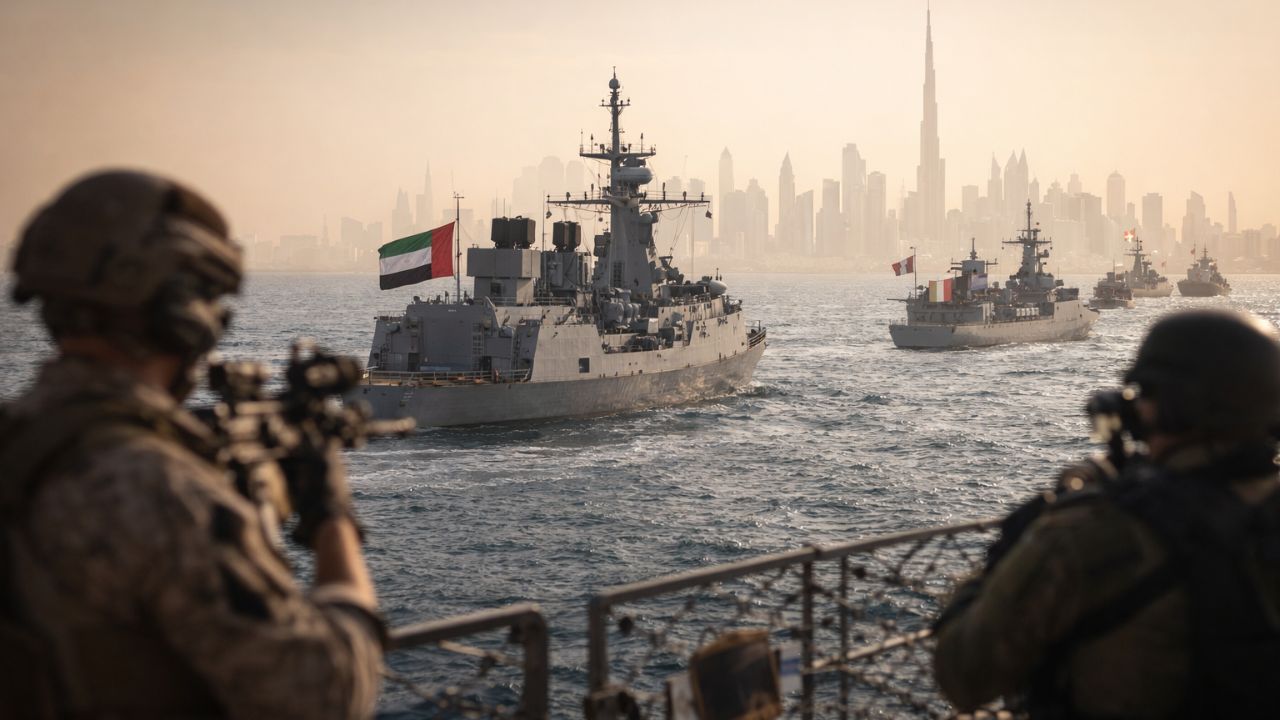
The Strait of Hormuz crisis has once again captured global attention, raising concerns about energy security, geopolitical stability, and international travel. As tensions rise in this strategically important region, a strong multinational response has emerged. The United Arab Emirates (UAE) has joined a 20-nation coalition, alongside major powers like the United Kingdom, France, Germany, and Japan, to prevent further escalation and ensure maritime safety.
Why the Strait of Hormuz Is So Important
A Global Energy Lifeline
The Strait of Hormuz is one of the most critical maritime chokepoints in the world. It connects the Persian Gulf to the Arabian Sea and plays a vital role in global oil transportation.
- Around 20% of the world’s oil supply passes through this narrow waterway
- It is essential for exports from countries like Saudi Arabia, UAE, Kuwait, and Iraq
- Any disruption here can impact global oil prices and energy markets
Rising Tensions and the Current Crisis
What Triggered the Situation

The current Strait of Hormuz tensions 2026 are linked to increased geopolitical friction in the Middle East. While exact triggers vary, the situation includes:
- Increased military presence in the region
- Reports of threats to commercial shipping
- Rising concerns about maritime security
UAE Joins 20-Nation Coalition to Prevent Escalation
A Unified Global Response
In response to the crisis, the UAE has joined a 20-nation coalition aimed at maintaining stability and protecting shipping routes. This coalition includes:
- United Kingdom
- France
- Germany
- Japan
- Other key global allies
Key Objectives of the Coalition
The coalition focuses on:
- Ensuring safe passage for commercial vessels
- Preventing military escalation
- Strengthening maritime surveillance and security operations
- Promoting diplomatic efforts to reduce tensions
Impact on Global Trade and Oil Markets
Potential Economic Effects

The Strait of Hormuz crisis impact on global trade cannot be ignored. Even the possibility of disruption can cause:
- Oil price volatility
- Increased shipping insurance costs
- Delays in global supply chains
Current Status
As of now:
- Shipping lanes remain open
- Oil exports continue without major interruptions
- Global markets are closely monitoring developments
Travel Safety Update: Dubai, Riyadh, and Muscat
No Direct Threat to Tourists
Authorities have confirmed that travel to Dubai, Riyadh, and Muscat is safe despite Strait of Hormuz tensions. Key points include:
- Airports are operating normally
- Hotels and tourism services remain unaffected
- No restrictions on international travelers
Why Travel Remains Safe

The tensions are largely confined to maritime zones, far from major urban centers. Cities like:
- Dubai (UAE)
- Riyadh (Saudi Arabia)
- Muscat (Oman)
Table: Key Facts About the Strait of Hormuz Crisis
| Factor | Details |
|---|---|
| Location | Between Persian Gulf and Arabian Sea |
| Oil Flow | ~20% of global oil supply |
| Coalition Members | UAE, UK, France, Germany, Japan, others |
| Main Goal | Prevent escalation and protect shipping |
| Travel Impact | No disruption to Dubai, Riyadh, Muscat |
| Current Status | Shipping open, monitoring ongoing |
What Travelers Should Know Right Now
Important Travel Advice
If you are planning to visit the Middle East, here’s what you should keep in mind:
- Flights are operating normally
- Follow updates from airlines and local authorities
- Travel insurance is recommended
- Stay informed but avoid panic
Tourism Industry Stability
The tourism sector in the region remains strong. Major attractions, shopping centers, and hotels continue to welcome visitors without interruption.
Geopolitical Significance of the Coalition
Why This Coalition Matters
The formation of a 20-nation coalition to protect Strait of Hormuz shipping routes sends a clear message:
- Global powers are committed to stability
- International cooperation is key to crisis management
- Economic security is a shared priority
Long-Term Implications
This crisis may lead to:
- Increased military presence in strategic waterways
- Stronger international alliances
- Greater focus on energy diversification
Future Outlook: What Happens Next?
Possible Scenarios
The situation could develop in several ways:
- De-escalation through diplomacy
- Continued monitoring without major conflict
- Increased tensions leading to stricter security measures
What Experts Are Saying
Most analysts believe that global cooperation will likely prevent a major conflict, as all parties have a strong interest in keeping trade routes open.
Conclusion
The Strait of Hormuz crisis 2026 highlights how interconnected the world has become. A single region can influence global energy markets, trade routes, and geopolitical stability. The decision by the UAE to join a 20-nation coalition with countries like the UK, France, Germany, and Japan reflects a strong commitment to maintaining peace and security in one of the world’s most vital waterways.