
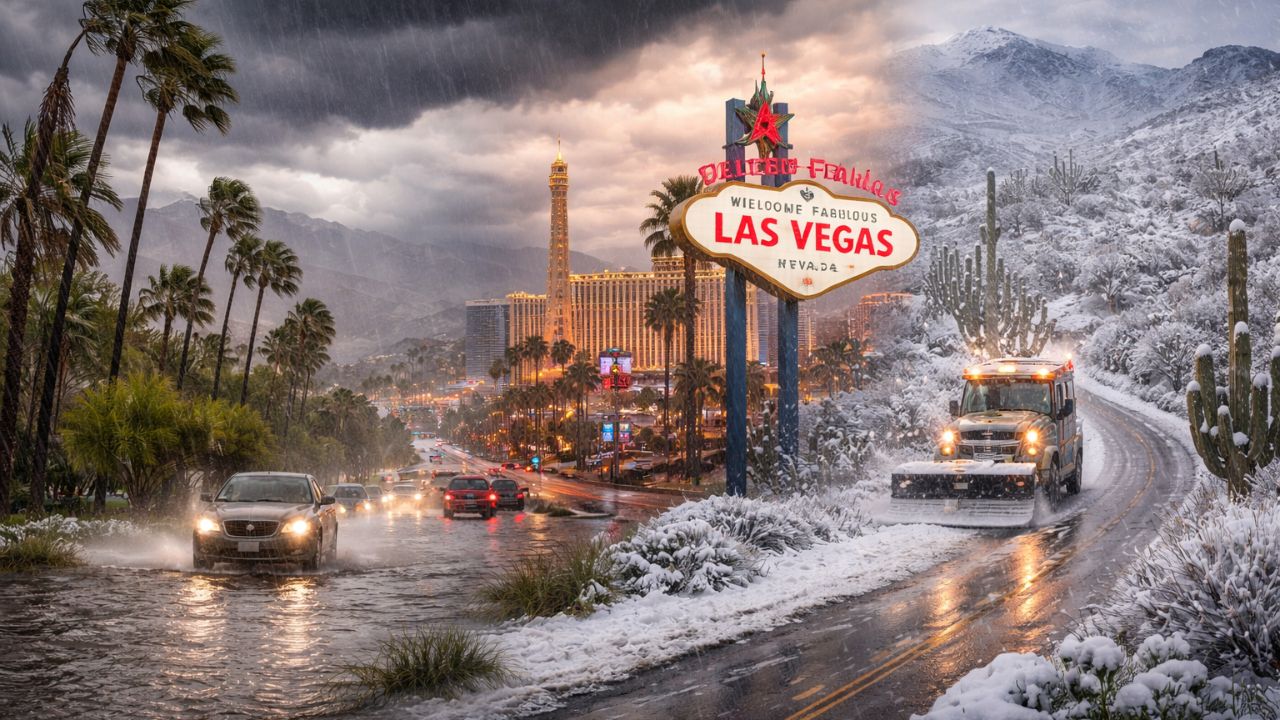
Severe weather conditions are sweeping across multiple regions in the United States, bringing a mix of heavy rain, gusty thunderstorms, and even snowfall to cities that are usually known for their dry and sunny climates. Areas such as Palm Springs, Phoenix, Las Vegas, Denver, and Flagstaff are currently experiencing unusual and rapidly changing weather patterns, raising concerns among residents, travelers, and local authorities.
Understanding the Current Severe Weather System
What Is Causing This Sudden Weather Shift?
The ongoing weather disturbance is primarily driven by a strong low-pressure system moving across the western and southwestern United States. This system is pulling in moisture from the Pacific Ocean while also interacting with colder air masses at higher altitudes.

As a result, cities that are typically dry are now experiencing:
- Heavy rainfall and localized flooding
- Strong winds and thunderstorms
- Snowfall in mountainous and elevated regions
Why Desert Cities Are Being Affected
Desert regions like Palm Springs and Phoenix are not used to handling large amounts of rainfall in a short time. Their infrastructure is often not designed for heavy rain, which increases the risk of:
- Flash floods
- Road closures
- Disruptions to daily life
This makes the severe weather conditions in Palm Springs and Phoenix particularly concerning.
Cities Under Severe Weather Alert
Overview of Impacted Cities

Below is a detailed table showing the major cities affected and the type of weather conditions they are currently facing:
| City | Weather Condition | Key Risks | Severity Level |
|---|---|---|---|
| Palm Springs | Heavy rain, thunderstorms | Flash floods, road closures | High |
| Phoenix | Rain, gusty winds | Flooding, reduced visibility | Moderate-High |
| Las Vegas | Rain, thunderstorms | Urban flooding, travel disruption | Moderate |
| Denver | Snow, strong winds | Snow accumulation, icy roads | High |
| Flagstaff | Heavy snow | Travel delays, hazardous driving | High |
Detailed Regional Weather Breakdown
Palm Springs and Southern California
Palm Springs is witnessing intense rainfall accompanied by thunderstorms. This is unusual for a region known for its dry desert climate. Sudden downpours are increasing the risk of flash floods, especially in low-lying areas.
Residents are advised to:
- Avoid driving through flooded streets
- Stay updated with local weather alerts
- Prepare for possible power outages
Phoenix, Arizona

Phoenix is dealing with steady rain and gusty winds, which can reduce visibility and make driving conditions dangerous. The city’s drainage systems may struggle to cope with heavy rainfall, increasing flood risks.
Las Vegas, Nevada
Las Vegas is experiencing thunderstorms and intermittent rain, which can disrupt tourism and outdoor activities. Sudden weather changes may also impact flights and road travel.
Denver and Colorado Regions
Denver is facing colder conditions with snowfall and strong winds. Snow accumulation is expected in higher elevations, creating hazardous driving conditions.
Residents should:
- Use winter tires or chains
- Avoid unnecessary travel
- Keep emergency supplies ready
Flagstaff, Arizona
Flagstaff is experiencing heavy snowfall, making it one of the hardest-hit areas. Roads are becoming icy, and travel is becoming increasingly difficult.
Impact on Travel and Daily Life
Transportation Disruptions
Severe weather is causing disruptions across multiple modes of transportation:
- Flight delays and cancellations
- Road closures due to flooding or snow
- Reduced visibility affecting driving conditions
Public Safety Concerns
Safety remains a top priority during this severe weather event impacting Palm Springs, Phoenix, Las Vegas, and surrounding areas. Emergency services are on high alert to respond to incidents such as:
- Flood rescues
- Road accidents
- Power outages
Economic and Tourism Impact
Cities like Las Vegas and Palm Springs rely heavily on tourism. Weather disruptions can lead to:
- Decreased visitor numbers
- Event cancellations
- Business interruptions
How Long Will the Severe Weather Last?
Meteorologists predict that this weather system will continue to affect the region for several days. Conditions may gradually improve as the system moves eastward, but lingering effects such as wet roads and snow-covered areas may persist.
Safety Tips for Residents and Travelers
Stay Informed
Always follow local weather updates and official advisories. This is crucial during a severe weather alert covering Palm Springs, Phoenix, Las Vegas, and other US cities.
Avoid Risky Travel
If possible, delay travel plans until conditions improve. Driving in heavy rain or snow can be extremely dangerous.
Prepare Emergency Supplies
Keep essentials ready, including:
- Flashlights
- Batteries
- Food and water
- First aid kits
Protect Your Property
Take steps to secure your home, such as clearing drainage areas and ensuring outdoor items are safely stored.
Climate Patterns and Changing Weather Trends
Are These Events Becoming More Common?
Unusual weather patterns like this are becoming more frequent. Climate experts suggest that changing global conditions may be contributing to:
- Increased storm intensity
- Unpredictable weather patterns
- More extreme events in unexpected regions
What Authorities Are Doing
Local governments and emergency services are actively responding to the situation by:
- Issuing weather alerts and advisories
- Deploying emergency response teams
- Monitoring flood-prone and high-risk areas
Conclusion
The current severe weather alert impacting Palm Springs, Phoenix, Las Vegas, Denver, and Flagstaff serves as a strong reminder that even regions known for stable climates can experience sudden and extreme weather changes. With a mix of heavy rain, thunderstorms, gusty winds, and snowfall, this system is affecting millions of people across different environments.