
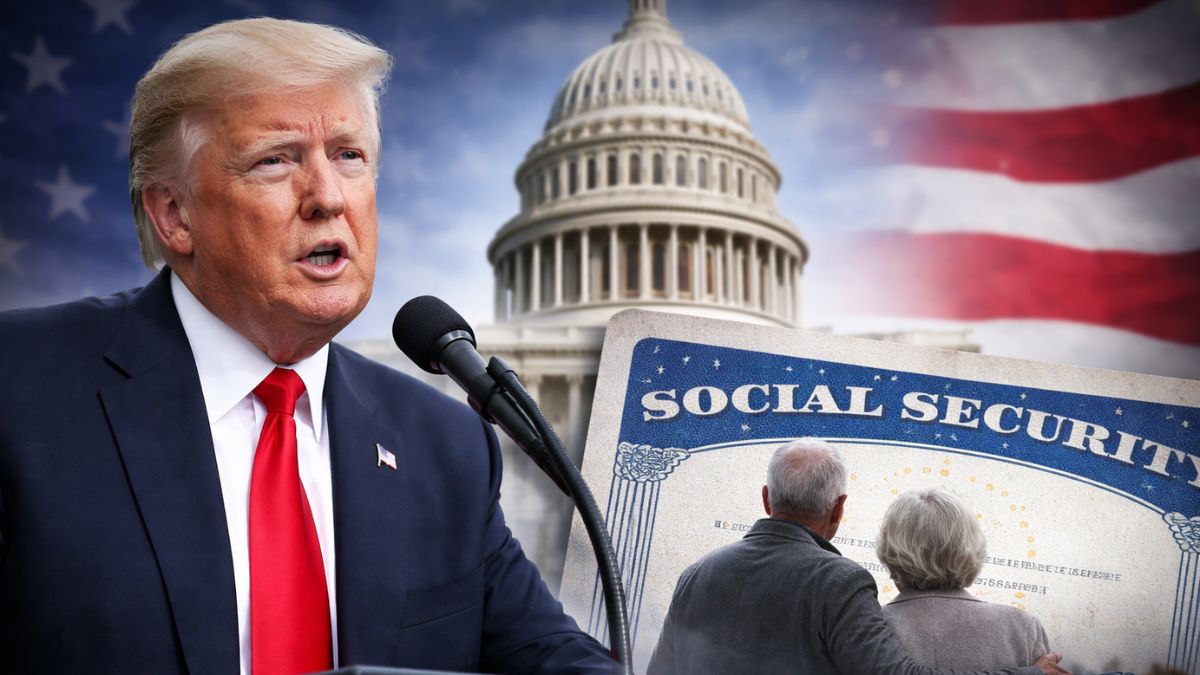
Social Security remains one of the most important financial lifelines for millions of Americans. In February alone, over 70 million people received Social Security benefits, including nearly 54 million retired workers. For many of these individuals, these monthly payments are not optional—they are essential for daily living.
Surveys conducted over the past two decades consistently show that 80% to 90% of retirees depend on Social Security income to cover basic expenses.

This makes the program’s financial stability a top priority. However, recent policy changes under Donald Trump have raised concerns about the system’s long-term sustainability.
Social Security’s Financial Outlook Has Been Weakening
Social Security has faced financial pressure for decades. Since 1985, annual trustee reports have warned of a growing long-term funding shortfall. The most recent projections estimate that this gap has reached a staggering $25.1 trillion over 75 years.
A more immediate issue is the expected depletion of reserves in the Old-Age and Survivors Insurance (OASI) trust fund, which pays benefits to retirees and surviving family members. According to current estimates, these reserves could run out by 2033.

Importantly, Social Security will not go bankrupt. Even without reserves, incoming payroll taxes will continue funding benefits. However, without reforms, beneficiaries could face automatic cuts of up to 23% once reserves are depleted.
How Trump’s Policy Increased the Funding Gap
The spotlight has recently turned to a major tax and spending law signed by Donald Trump on July 4, 2025. While the legislation provides tax relief for certain groups, it also reduces revenue flowing into Social Security.
Key provisions include:
- Increased standard deductions for seniors aged 65+
- Tax deductions on tips up to $25,000
- Partial deductions on overtime income

While these measures put more money into workers’ pockets, they also reduce payroll tax contributions, which are a primary funding source for Social Security.
According to the Social Security Administration’s Office of the Actuary, this law is expected to increase costs by approximately $168.6 billion between 2025 and 2034. This effectively deepens the program’s existing funding gap.
Additionally, projections suggest the OASI trust fund could now be depleted even earlier—potentially by late 2032, accelerating the timeline for possible benefit reductions.
Bigger Challenges: Demographic Shifts
While policy changes have an impact, experts agree that demographic trends pose a far greater threat to Social Security’s future.
Several key factors are driving this challenge:
1. Aging Population
The retirement of the baby boomer generation has increased the number of beneficiaries. At the same time, fewer workers are contributing to the system.
2. Longer Life Expectancy
Americans are living longer than ever before, meaning Social Security must pay benefits over extended periods.
3. Declining Birth Rates
Recent data shows that the U.S. birth rate has dropped to historic lows. This reduces the number of future workers who will support the system.
4. Reduced Immigration
Lower levels of net migration have also contributed to fewer workers entering the labor force, further weakening payroll tax revenue.
5. Income Inequality
A growing share of income is no longer subject to payroll taxes. As a result, a smaller portion of total earnings contributes to Social Security funding.
What This Means for Americans
The combination of policy decisions and long-term demographic trends creates a complex challenge. While Trump’s tax law has added pressure to Social Security’s finances, it is only part of a much larger issue.
For current and future retirees, this could mean:
- Potential benefit reductions in the coming decade
- Increased urgency for policy reforms
- Greater reliance on personal savings and retirement planning
Social Security remains a critical support system for millions, but its financial future is uncertain. Policies under Donald Trump have contributed to a $169 billion funding gap, but the larger concern lies in long-term demographic shifts.
FAQs
1. Will Social Security run out of money?
No, Social Security will continue paying benefits, but payouts could be reduced if reserves are depleted.
2. How much could benefits be reduced?
Current estimates suggest potential cuts of up to 23% if no reforms are implemented.
3. What caused the $169 billion gap?
The gap is largely linked to reduced payroll tax revenue following recent tax policies, along with ongoing demographic challenges.