
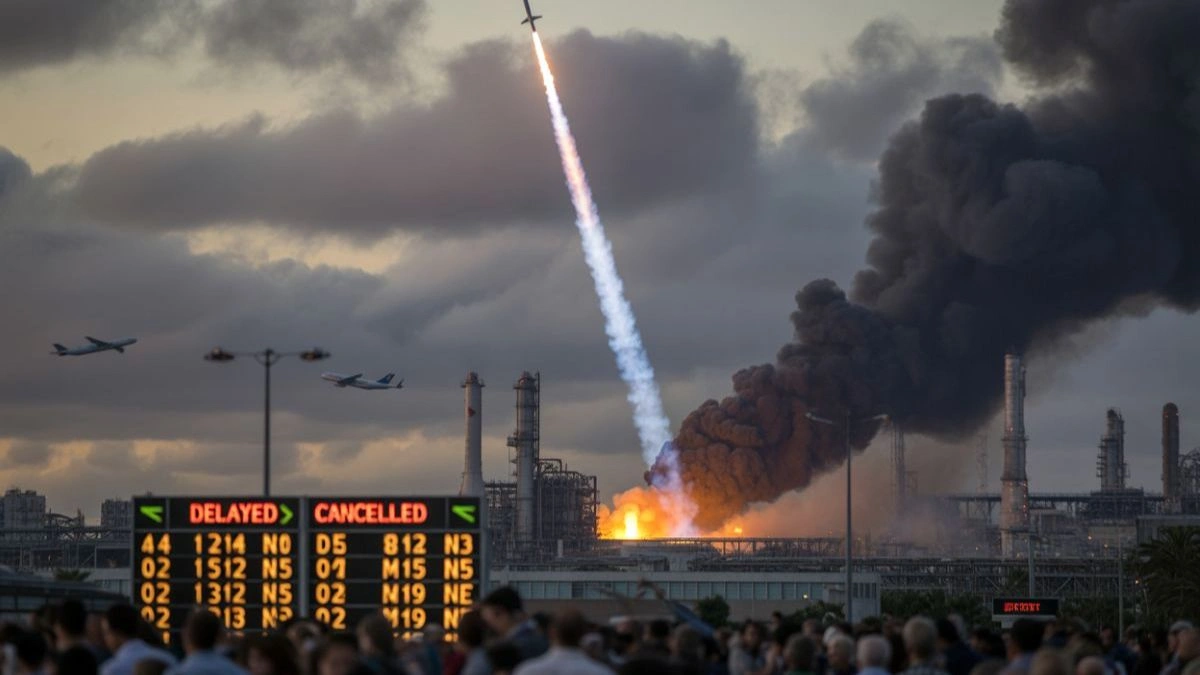
Israel, Qatar, Saudi Arabia, the UAE, Kuwait, and neighboring countries are experiencing severe consequences as geopolitical tensions intensify in the Middle East. Iran’s continued missile strikes on critical oil infrastructure—most notably the Haifa refinery in Israel—have triggered widespread disruption across tourism, aviation, and energy sectors.
These developments have not only destabilized regional energy supplies but also increased travel uncertainty, leading to rising airfares and declining visitor numbers across key destinations.
Haifa Refinery Attack and Energy Supply Disruptions
A major turning point in the crisis was the strike on Israel’s Haifa oil refinery, which accounts for nearly 60% of the country’s oil supply.
The refinery contributes approximately:
- 59% of gasoline
- 65% of diesel
- 52% of jet fuel
This disruption has created immediate concerns around fuel availability and national energy security. The shortage of jet fuel, in particular, has directly affected aviation operations, resulting in delays, cancellations, and reduced flight frequencies.
Beyond Israel, the impact has extended across Gulf nations that rely heavily on oil production and exports, amplifying the crisis across the broader Middle East.
Air Travel Disruptions and Rising Airfares
Airlines operating in the region are facing mounting challenges due to unstable fuel supplies and increased operational costs. Flight routes have been disrupted, and schedules have been adjusted to cope with limited fuel availability.
As jet fuel prices surge, airlines have introduced higher fuel surcharges, significantly increasing ticket prices. Countries such as the UAE and Saudi Arabia—major aviation hubs—are witnessing sharp rises in airfare costs, making travel less affordable for both domestic and international passengers.
Israel’s role as a regional transit hub means disruptions there are creating a cascading effect, impacting connectivity across neighboring countries.
Tourism Decline Across the Gulf Region
The ongoing conflict has caused a noticeable drop in inbound tourism across the Middle East. Travelers are increasingly hesitant to visit destinations perceived as unstable, even if some countries are not directly involved in the conflict.
Popular tourism centers like Dubai and Doha are experiencing booking cancellations and reduced visitor numbers, as safety concerns and travel disruptions deter tourists.
Major events and planned trips are also being reconsidered, further affecting the tourism-dependent economies of the region.
Energy Crisis and Economic Implications
The repeated attacks on oil facilities across the region have intensified concerns about long-term energy security. Countries such as Saudi Arabia, Qatar, and the UAE are struggling to balance domestic energy needs with their global export commitments.
Rising fuel prices are not only affecting the aviation sector but also influencing broader economic conditions. The increase in energy costs is being felt globally, contributing to higher transportation expenses and economic uncertainty in multiple industries.
Regional Impact Overview
The crisis has created widespread disruption across multiple sectors:
- Israel: Significant energy loss and major aviation disruptions
- Saudi Arabia & UAE: Increased airfare and reduced tourism demand
- Qatar & Kuwait: Declining visitor confidence and rising operational costs
The interconnected nature of energy and travel industries has amplified the impact, making recovery more complex.
Global Tourism Faces Ripple Effects
The consequences of the Middle East crisis are extending beyond the region. International travelers are reconsidering trips due to higher costs, safety concerns, and uncertainty, leading to a slowdown in global tourism activity.
Travel agencies have reported reduced bookings, while airlines are navigating fluctuating demand and rising expenses. The situation highlights how regional conflicts can quickly influence global travel patterns.