
Bulgaria has officially joined a growing group of nations—including Greece, Romania, Ukraine, Poland, Slovakia, Hungary, Italy, Armenia, and others—in a landmark energy and travel partnership with the United States. This collaboration represents a major shift in Europe’s energy strategy, focusing on diversification, stability, and reduced reliance on adversarial suppliers.
The United States is now playing a central role in supporting energy security across Europe, while also strengthening trade and travel connections. This alliance is expected to generate economic growth, create jobs, and enhance long-term resilience across participating countries.
Vertical Gas Corridor: Strengthening Eastern Europe’s Energy Security
In February 2026, leaders from Bulgaria, Greece, Romania, Moldova, Ukraine, and the European Commission advanced plans for the Vertical Gas Corridor—a key infrastructure project designed to improve energy independence.
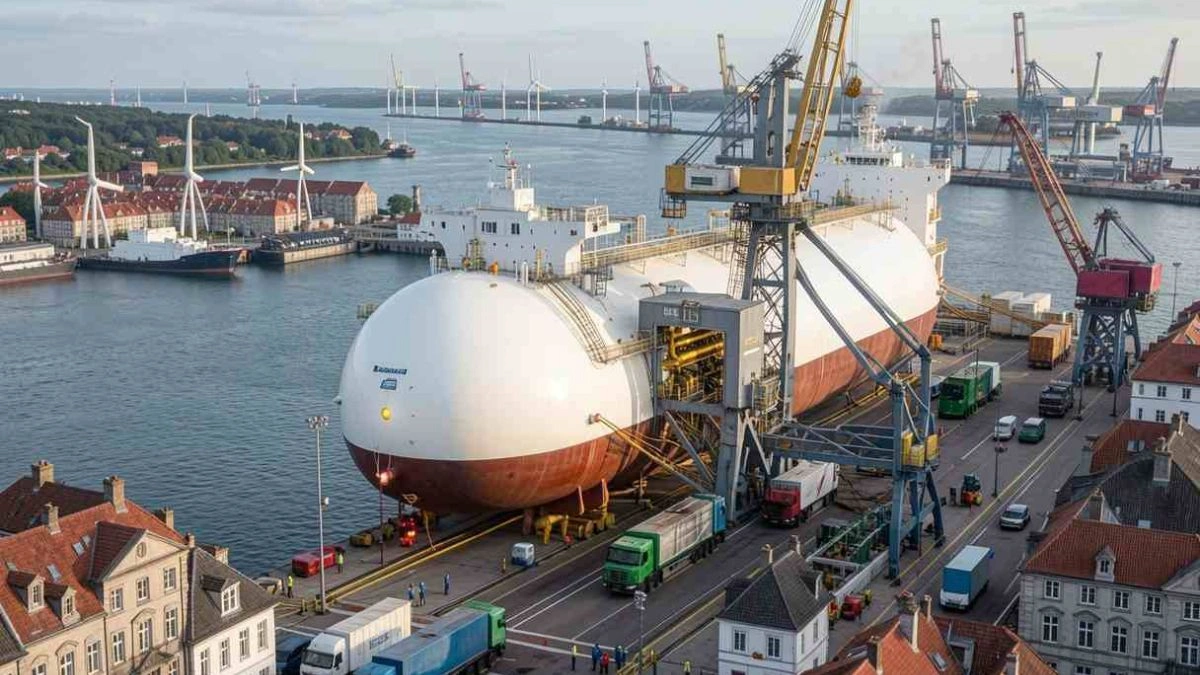
This corridor will enable U.S. liquefied natural gas (LNG) to move efficiently from Greece through Bulgaria and Romania, reaching Ukraine. By harmonising tariffs and simplifying regulations, the project ensures smoother cross-border energy flow.
The initiative plays a vital role in reducing dependence on hostile suppliers while offering affordable and secure energy. It also reinforces economic cooperation and strengthens the strategic presence of the United States in the Black Sea region.
EU–US Energy Pact: A $750 Billion Strategic Commitment
A major turning point came with the EU–US Energy Pact, announced in August 2025. Under this agreement, European countries committed to purchasing $750 billion worth of U.S. LNG, oil, and nuclear energy products by 2028.
A joint EU–U.S. Energy Security Task Force oversees the transition away from Russian energy sources. The EU had already imported over 50 billion cubic metres of U.S. LNG in 2022, making the United States its largest supplier.
This agreement highlights Europe’s confidence in U.S. energy reliability and marks a fundamental shift in global energy dynamics, positioning American energy as a cornerstone of Europe’s future.
Eastern Mediterranean Cooperation Expands
The Eastern Mediterranean 3+1 Energy Ministerial, held in Athens in November 2025, brought together Greece, Cyprus, Israel, and the United States to enhance regional energy cooperation.
The countries agreed to strengthen interconnectivity projects under the India–Middle East–Europe corridor, focusing on securing infrastructure and expanding trade routes. They also addressed threats to energy systems and committed to deeper collaboration, with further discussions planned in Washington in 2026.
Italy’s Strategic Energy Alignment with the U.S.
In April 2025, a summit between U.S. leadership and Italian Prime Minister Giorgia Meloni led to increased Italian imports of U.S. LNG. Italy is also set to benefit from its role in the India–Middle East–Europe Economic Corridor.
This initiative will improve access to reliable natural gas and boost infrastructure development, reinforcing Italy’s position in Europe’s evolving energy landscape while strengthening its ties with the United States.
Bulgaria’s Shift Toward U.S. Nuclear Technology
Bulgaria is moving forward with plans to adopt small modular reactors (SMRs) with support from the United States. In January 2026, training sessions and technical exchanges were conducted under the FIRST program.
This transition aims to reduce dependence on Russian nuclear technology while advancing clean energy solutions. By embracing U.S. expertise, Bulgaria is positioning itself as a leader in sustainable energy within Eastern Europe.
Poland and Slovakia Advance Nuclear Projects
Poland has partnered with the United States to build its first AP-1000 nuclear power plant, with construction expected to begin in 2026. The project will deliver reliable, low-emission energy while creating jobs and reducing coal dependence.
Similarly, Slovakia has agreed to construct a 1,200 MWe nuclear reactor at Jaslovské Bohunice using U.S. technology. This move modernises its energy infrastructure and strengthens energy independence.
Both projects reflect a broader regional trend of adopting American nuclear solutions.
Hungary and Armenia Deepen Cooperation with the U.S.
Hungary has strengthened its ties with the United States through nuclear agreements, LNG purchases worth $600 million, and improved travel connectivity. The country’s return to the Visa Waiver Program will enable easier travel, with direct flights resuming in 2026.
Armenia has also signed a 123 Agreement with the United States, enabling peaceful nuclear cooperation. This agreement supports Armenia’s clean energy goals and strengthens its geopolitical alignment with Washington.
Europe’s Winter Preparedness and LNG Strategy
To prepare for potential energy disruptions, the European Commission has urged early gas storage refills. Increased imports of U.S. LNG play a crucial role in ensuring supply stability.
Despite geopolitical tensions, Europe’s diversified energy sources and strategic planning reduce vulnerability to external shocks, offering greater security for consumers.