
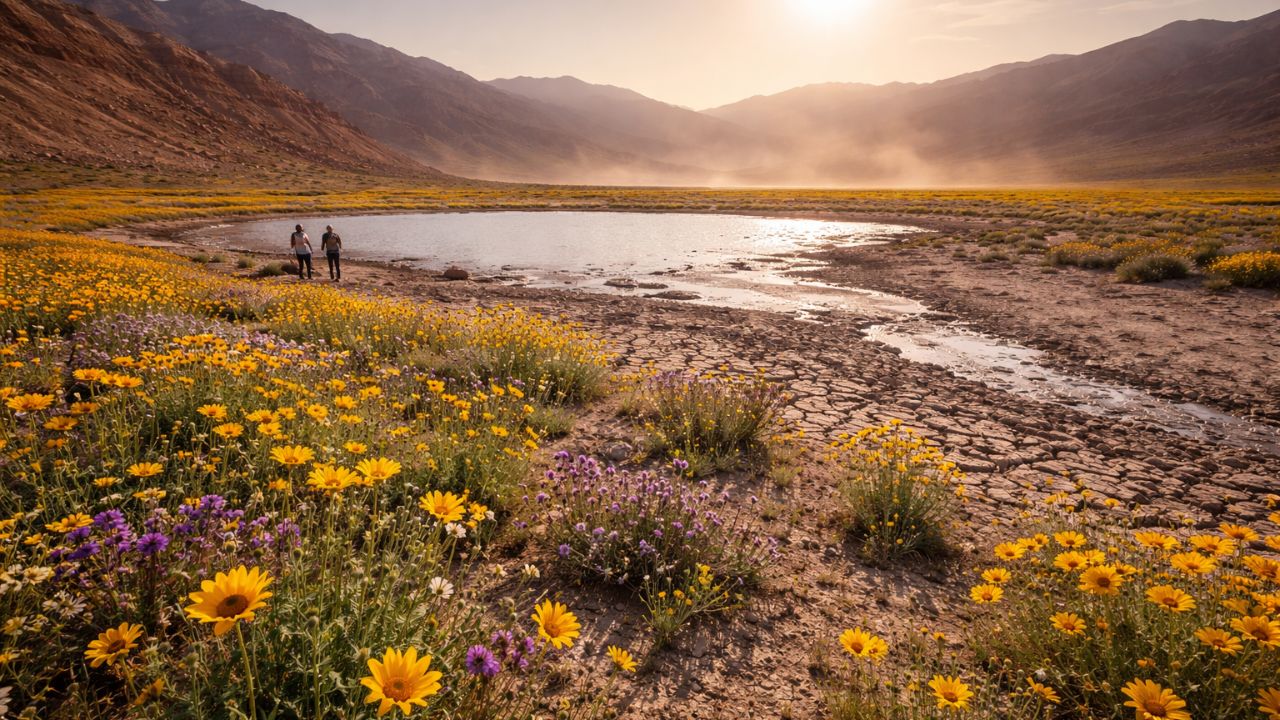
Death Valley, known as one of the hottest and driest places on Earth, recently witnessed a breathtaking natural event — a rare desert superbloom. For a short period, the barren landscape transformed into a colorful paradise filled with vibrant wildflowers and even a temporary lake. However, this stunning scene did not last long. A sudden 100°F heatwave quickly dried up the fragile ecosystem, bringing the spectacle to an abrupt end. This article explains what happened, why it matters, and what it tells us about changing environmental conditions.
What Is a Desert Superbloom and Why It Happens
Understanding the Rare Phenomenon
A desert superbloom is a rare natural event that occurs when desert conditions align perfectly. Normally, deserts receive very little rainfall, but when they experience unusually high precipitation, dormant seeds buried in the soil suddenly come to life.
Key Conditions Required for a Superbloom
For a superbloom to occur in places like Death Valley, several factors must work together:
- Heavy and consistent rainfall
- Cool temperatures following rain
- Low wind activity to protect seedlings
- Healthy seed bank stored in the soil
Temporary Lake Formation in Death Valley
How the Lake Appeared
Along with the superbloom, another rare event occurred — the formation of a temporary lake in Badwater Basin, the lowest point in North America. This happened due to:
- Record rainfall from storms
- Water flowing into the basin with no immediate evaporation
- Cooler temperatures that slowed down water loss
Why Temporary Lakes Are Rare in Death Valley
Death Valley is one of the driest regions globally. Typically, any rainwater evaporates quickly due to extreme heat. A stable temporary lake requires:
- Significant rainfall volume
- Mild temperatures
- Minimal evaporation for several days
100°F Heatwave: The Sudden End of the Spectacle
Rapid Rise in Temperature
Shortly after the bloom and lake formation, temperatures surged to over 100°F (38°C). This sudden heatwave drastically changed the environment.
Effects on the Superbloom
The intense heat caused:
- Rapid dehydration of wildflowers
- Shortened blooming period
- Early wilting and seed drop
Impact on the Temporary Lake
The heatwave also led to:
- Fast evaporation of water
- Shrinking lake surface area
- Complete drying in some areas
Key Facts About Death Valley Superbloom and Heatwave
| Factor | Details |
|---|---|
| Location | Death Valley National Park, California |
| Event Type | Rare desert superbloom and temporary lake |
| Cause | Heavy rainfall followed by mild weather |
| Peak Attraction | Colorful wildflowers and reflective lake |
| Heatwave Temperature | Over 100°F (38°C) |
| Impact | Rapid drying of lake and early end of bloom |
| Frequency | Once every few years or even decades |
Why This Event Matters for Climate and Environment
Indicator of Climate Variability
The combination of heavy rainfall followed by extreme heat shows how climate patterns are becoming more unpredictable. Scientists believe such events may become more frequent due to global climate shifts.
Stress on Desert Ecosystems
Desert plants are adapted to harsh conditions, but sudden extremes can still affect them:
- Shorter growth cycles
- Reduced seed production
- Increased stress on wildlife
Tourism and Environmental Awareness
The superbloom attracted thousands of visitors, highlighting:
- The beauty of desert ecosystems
- The importance of conservation
- The need to protect fragile environments
The Science Behind Rapid Evaporation
Why Water Disappears Quickly in Death Valley
Death Valley has:
- Extremely high temperatures
- Very low humidity
- Strong sunlight exposure
Evaporation Process Explained
Evaporation happens when:
- Heat energy converts water into vapor
- Dry air absorbs moisture quickly
- Wind speeds up the process
Long-Tail Keyword Focus: Death Valley Superbloom 2026 Heatwave Impact
The Death Valley superbloom 2026 heatwave impact on temporary lake and desert ecosystem has become a major topic of discussion. This rare combination of events shows how quickly nature can change under extreme conditions.
Visitor Experience During the Superbloom
A Once-in-a-Lifetime Sight
Visitors described the scene as magical:
- Fields of yellow, purple, and white flowers
- Mirror-like reflections in the temporary lake
- Unique photography opportunities
Challenges Faced by Tourists
However, the sudden heatwave brought challenges:
- Rising temperatures made travel difficult
- Shorter viewing window
- Safety concerns due to extreme heat
What Experts Say About Future Superbloom Events
Increasing Uncertainty
Experts suggest that while climate change may increase rainfall in some cases, extreme heatwaves may shorten bloom durations.
Future Predictions
- More frequent but shorter superblooms
- Increased evaporation rates
- Greater environmental stress
Conservation and Responsible Tourism
Protecting Fragile Desert Life
Visitors are encouraged to:
- Stay on designated paths
- Avoid stepping on flowers
- Follow park guidelines
Importance of Awareness
The event serves as a reminder that even the harshest environments are delicate and need protection.
Conclusion
The recent Death Valley superbloom and temporary lake event was a rare and beautiful reminder of nature’s power to surprise us. However, the sudden 100°F heatwave drying up the lake and ending the bloom early also shows how fragile these moments are. While such events bring joy and wonder, they also highlight the growing impact of climate variability on natural ecosystems. As weather patterns become more extreme, these rare spectacles may become shorter and less predictable. Protecting and understanding these environments is more important than ever, ensuring that future generations can still witness such extraordinary natural events.