
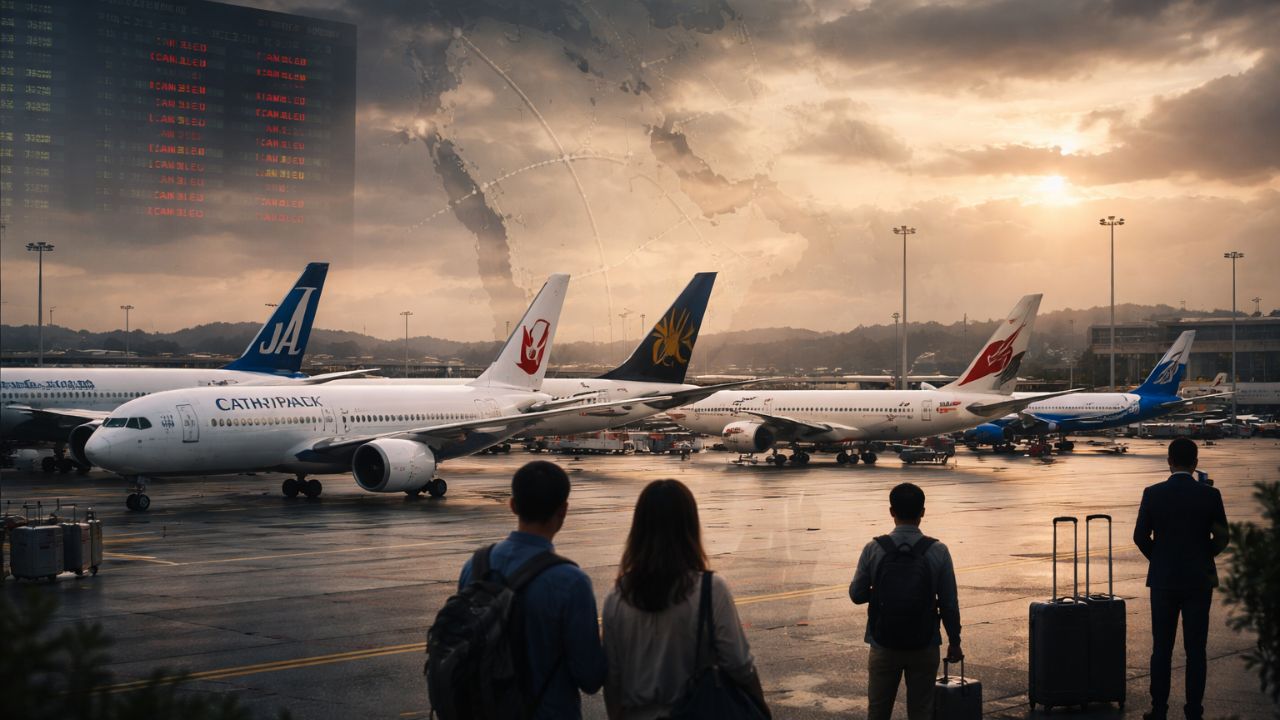
The global aviation industry is currently facing a significant disruption as several major airlines have temporarily suspended key flight routes across the Middle East. This decision comes amid rising geopolitical tensions and growing safety concerns in the region, impacting millions of travelers worldwide. Airlines such as Cathay Pacific, Japan Airlines (JAL), Singapore Airlines, Air India, IndiGo, and several others have taken precautionary measures by halting operations on selected routes until April 30, 2026.
Why Airlines Are Suspending Middle East Routes
Rising Geopolitical Tensions
The primary reason behind these suspensions is the escalation of geopolitical instability in parts of the Middle East. Airlines are prioritizing passenger safety and crew security, which has led to the temporary closure of certain air corridors.
Airspace Safety Concerns
Airlines rely heavily on safe and predictable airspace routes. With potential risks such as restricted zones, military activity, and airspace congestion, carriers are choosing to reroute or cancel flights entirely to avoid unsafe conditions.
Insurance and Regulatory Pressures
Insurance providers and aviation regulators are also playing a role. Higher risk levels in certain regions often lead to increased insurance costs and strict compliance requirements, prompting airlines to suspend operations.
Airlines Affected by the Suspension
Several leading international and regional airlines have announced route suspensions or modifications. These include:
Cathay Pacific
The Hong Kong-based airline has halted multiple Middle East routes, particularly those connecting to Gulf hubs.
Japan Airlines (JAL)
JAL has reduced or temporarily stopped flights to select Middle Eastern destinations due to safety assessments.
Singapore Airlines
Singapore Airlines has either rerouted or suspended flights passing through high-risk airspaces.
Air India
Air India has adjusted flight paths and suspended certain direct connections to ensure passenger safety.
IndiGo
India’s largest low-cost carrier, IndiGo, has also paused operations on specific Middle East routes.
Other Airlines
Additional carriers such as Malaysia Airlines, Scoot, Philippine Airlines, and others have implemented similar measures.
Key Travel Routes Impacted
The suspensions have significantly affected connectivity between Asia and the Middle East. Below is a summary of impacted routes:
| Airline | Affected Routes | Status | Duration |
|---|---|---|---|
| Cathay Pacific | Hong Kong to Dubai, Riyadh | Suspended | Until April 30, 2026 |
| Japan Airlines | Tokyo to Doha, Dubai | Reduced/Suspended | Until April 30, 2026 |
| Singapore Airlines | Singapore to Dubai, Abu Dhabi | Rerouted/Suspended | Until April 30, 2026 |
| Air India | Delhi/Mumbai to Gulf cities | Adjusted/Suspended | Until April 30, 2026 |
| IndiGo | Multiple India–Middle East routes | Suspended | Until April 30, 2026 |
What This Means for Travelers
Flight Cancellations and Delays
Passengers may experience cancellations, delays, or longer travel times due to rerouted flights. Airlines are attempting to minimize inconvenience, but disruptions are unavoidable.
Increased Ticket Prices
With reduced flight availability, ticket prices on operational routes may increase due to higher demand and limited capacity.
Limited Seat Availability
Flights that are still operational are likely to be fully booked quickly. Travelers are advised to plan early and confirm reservations.
Passenger Rights and Refund Policies
Refund Options
Most airlines are offering full refunds for canceled flights. Passengers can choose between:
- Full refund to original payment method
- Travel vouchers for future use
- Free rebooking on alternate dates
Rebooking Flexibility
Airlines are providing flexible rebooking options without additional charges, allowing travelers to adjust their plans.
Travel Insurance Coverage
Travel insurance policies may cover cancellations due to geopolitical risks. It is advisable to check policy details carefully.
Alternative Travel Options
Rerouted Flights
Many airlines are offering alternative routes that bypass high-risk areas. These may involve longer travel times but ensure safety.
Connecting Flights
Passengers can opt for connecting flights via safer transit hubs such as Europe or Southeast Asia.
Other Airlines
Some airlines not affected by the suspensions may still operate limited routes. However, availability may be restricted.
Tips for Travelers During This Period
Stay Updated with Airline Notifications
Regularly check updates from your airline regarding flight status and changes.
Book Flexible Tickets
Choose tickets that allow changes or cancellations without heavy penalties.
Avoid Last-Minute Bookings
Plan your travel in advance to secure better options and prices.
Monitor Government Advisories
Keep an eye on travel advisories issued by your country for updated safety information.
Impact on Global Travel and Aviation
Disruption in International Connectivity
The suspension of major Middle East routes is affecting global travel networks, especially between Asia and Europe.
Economic Impact
Airlines are facing revenue losses, while tourism-dependent economies in the Middle East may also see a temporary decline in visitor numbers.
Operational Challenges
Airlines must manage complex rerouting logistics, increased fuel costs, and scheduling adjustments.
Future Outlook: What Happens After April 30, 2026
The current suspension is set to last until April 30, 2026, but the situation remains dynamic. Airlines will continue to assess:
- Security conditions in the region
- Airspace safety updates
- Government and regulatory guidance
Conclusion
The suspension of key Middle East routes by major airlines like Cathay Pacific, JAL, Singapore Airlines, Air India, and IndiGo marks a significant moment in global aviation. While the decision prioritizes safety, it has created challenges for travelers, including cancellations, delays, and higher costs.