
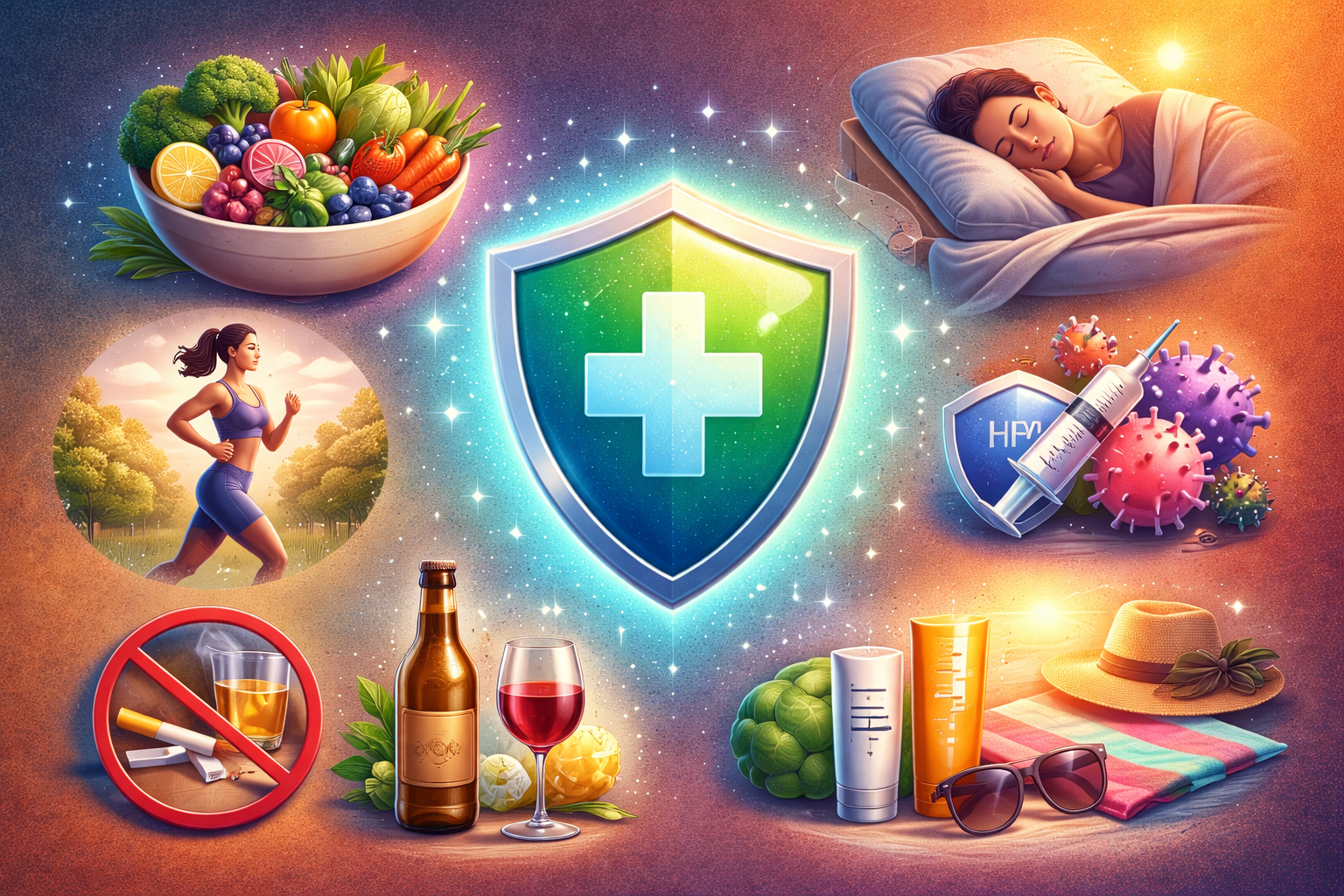
The idea of “boosting” immunity is often oversimplified, but the link between the immune system and cancer prevention is real. Your immune system helps defend against harmful infections, responds to damage from environmental exposures, moderates chronic inflammation, and can recognize some abnormal cells before they grow into larger problems.
This protective role is often called immunosurveillance. At the same time, no diet, herb, or supplement can guarantee that cancer will never develop. The real goal is to support normal immune function and reduce known cancer risk factors through evidence-based daily habits. Around 30% to 50% of cancers are considered preventable, which is why lifestyle and prevention choices matter so much.
A natural approach to cancer prevention does not mean miracle cures or unproven cleanses. It means giving your body the conditions it needs to function well: enough sleep, regular physical activity, a healthy body weight, nutrient-dense food, minimal alcohol, no tobacco, and protection against cancer-causing infections such as HPV and hepatitis B.
These habits do not work by “supercharging” immunity overnight. They help maintain healthier immune balance, lower inflammation, reduce DNA damage, and support the body’s ability to control abnormal cell growth over time.
How The Immune System Helps Prevent Cancer
Your immune system is not only for fighting colds and infections. It also helps identify unusual cells, remove damaged cells, and respond to cancer-causing microbes.
Researchers describe several ways immunity helps reduce cancer risk: it defends against carcinogenic infectious agents, responds to exposure-related damage, moderates inflammation that can contribute to cancer, and helps detect early abnormal cells.
When immunity is impaired or chronically dysregulated, cancer risk can rise. This is one reason long-term inflammation, obesity, smoking, and certain infections matter so much.
Still, it is important to be precise. A stronger immune system does not mean an “activated” immune system all the time. Excess immune activation can also be harmful, especially when it drives ongoing inflammation. For cancer prevention, the healthiest target is balanced immunity: responsive enough to protect you, but not constantly inflamed.
Quick Table: Natural Ways To Support Immunity And Lower Cancer Risk
| Habit | How It Supports Immunity | Cancer Prevention Benefit |
|---|---|---|
| Sleep | Helps regulate immune signaling and recovery | Better metabolic health and lower inflammation |
| Physical Activity | Improves immune regulation and insulin sensitivity | Lowers risk of several cancers |
| Healthy Weight | Reduces chronic inflammation and hormone disruption | Lower risk of 13 obesity-related cancers |
| Plant-Rich Diet | Provides fiber, vitamins, minerals, and phytochemicals | Supports weight control and lowers risk through better diet quality |
| Less Alcohol | Reduces immune stress and carcinogen exposure | Lowers risk of at least 7 cancers |
| No Tobacco | Prevents immune injury and DNA damage | Major reduction in cancer risk |
| HPV And Hepatitis B Vaccination | Prevents infection-related cancer pathways | Helps prevent cervical and liver cancer, among others |
| Sun Protection | Lowers DNA damage from UV radiation | Reduces skin cancer risk |
Prioritize Sleep For Immune Balance
One of the most underestimated natural tools for immunity is sleep. Sleep and the body clock strongly regulate immune function. During healthy sleep, the body coordinates immune signaling, recovery, and inflammatory control.
In adults, regularly getting about 7 to 9 hours is widely recommended for health, and research shows sound sleep patterns support immune function. Poor sleep also raises the risk of weight gain and metabolic problems, which matter because excess body fat is linked to multiple cancers.
Sleep is not a stand-alone cancer shield, but it influences many systems at once. When people sleep too little for long periods, they often move less, snack more, gain weight more easily, and have worse inflammatory balance. Natural cancer prevention starts with basics, and sleep quality is one of them.
Exercise Regularly To Support Immune Health
Regular physical activity is one of the most reliable ways to strengthen the body naturally. It improves circulation, supports immune regulation, helps control body fat, reduces insulin resistance, and lowers chronic inflammation.
It is also directly linked to lower risk for several cancers, including colon, breast, kidney, uterus, bladder, esophagus, and stomach cancers. Current public health guidance continues to recommend at least 150 minutes of moderate activity or 75 minutes of vigorous activity each week, along with muscle-strengthening activity on 2 days weekly.
You do not need extreme workouts. Brisk walking, cycling, swimming, yoga, light strength training, and daily movement breaks all help. The most important point is consistency. A body that moves regularly tends to manage inflammation and metabolism better, and both of those matter in cancer prevention.
Maintain A Healthy Weight To Reduce Inflammation
Excess body fat does more than change appearance. It can disrupt hormones, raise insulin levels, and create chronic inflammation that directly promotes tumor growth by several mechanisms.
Obesity is linked with 13 cancers, including cancers of the breast after menopause, colorectum, endometrium, kidney, liver, pancreas, and esophagus. In the United States, obesity-related cancers account for a large share of the cancer burden.
This is why natural immune support is not just about supplements. It is about metabolic health. Better sleep, more activity, fewer ultra-processed foods, and lower alcohol intake all help the body maintain healthier weight and immune balance. Even modest, sustainable improvement matters more than short, extreme diets.
Eat A Plant-Forward Diet Rich In Fiber And Micronutrients
A food pattern that supports immunity and cancer prevention is usually simple: more vegetables, fruits, whole grains, beans, lentils, nuts, seeds, and lean protein; less processed meat, excess sugar, and heavily processed foods.
Current cancer-prevention guidance recommends at least 2½ to 3 cups of vegetables and 1½ to 2 cups of fruit daily, depending on calorie needs. These foods help because they supply fiber, vitamins, minerals, and many naturally occurring compounds that support overall health and make weight control easier.
A plant-forward pattern also supports the gut microbiome, which interacts with immune function. Research interest in the microbiome and cancer prevention has grown sharply, although this field is still evolving.
The practical takeaway is clear enough already: a varied, fiber-rich diet is better for immune and metabolic health than one dominated by refined grains, processed foods, and frequent processed meat.
Avoid Tobacco Completely
If there is one habit that most powerfully lowers cancer risk, it is avoiding tobacco. Smoking damages DNA, harms immune defenses, drives inflammation, and exposes the body to thousands of chemicals. Tobacco use remains one of the most important preventable causes of cancer worldwide.
Natural prevention cannot coexist with smoking. There is no herb, smoothie, or vitamin routine that offsets tobacco injury.
Avoiding secondhand smoke matters too. Reducing tobacco exposure protects the lungs, blood vessels, and immune system at the same time.
Limit Alcohol Because It Weakens Prevention Efforts
Many people do not think of alcohol as a cancer issue, yet it is clearly linked to at least seven cancers: mouth, throat, larynx, esophagus, liver, colorectum, and breast. The risk increases with the amount consumed and with long-term regular drinking.
Even one drink per day can raise the risk of certain cancers, including breast cancer and some head and neck cancers. Global estimates have linked nearly 4% of cancers diagnosed in 2020 to alcohol.
If your goal is to strengthen your body naturally, cutting back on alcohol is one of the most evidence-based steps you can take. Less alcohol means less carcinogen exposure and better support for liver, metabolic, and immune health.
Use Vaccines As Part Of Natural Prevention
Natural prevention should not exclude modern prevention tools that work with the body’s own defenses. HPV vaccination and hepatitis B vaccination are excellent examples.
The HPV vaccine can prevent more than 90% of cancers caused by HPV, including many cases of cervical, anal, vulvar, vaginal, penile, and some throat cancers. The hepatitis B vaccine helps prevent infection that can lead to chronic liver disease and liver cancer.
Vaccines do not “replace” healthy living. They add another layer of scientifically proven protection by preventing infections that can trigger cancer-causing changes over time.
Protect Your Skin And Lower Unnecessary Inflammation
Another overlooked part of natural prevention is lowering avoidable damage. Too much UV radiation injures skin cells and increases skin cancer risk. Unnecessary inflammation from obesity, smoking, heavy alcohol use, and harmful exposures also makes the internal environment less healthy. Prevention is not only about adding beneficial habits. It is also about removing repeated sources of injury.
What Natural Cancer Prevention Really Looks Like
The most realistic natural strategy is not a detox or an expensive supplement stack. It is a repeatable daily routine: sleep well, move often, eat more plants, maintain a healthy weight, avoid tobacco, drink little or no alcohol, stay vaccinated, and keep up with screening and medical advice appropriate for your age and risk.
These habits support immune health while also acting on the biggest known preventable causes of cancer.
Conclusion
Immunity and cancer prevention are closely connected, but the answer is not to chase quick “immune boosters.” Real protection comes from supporting the body’s normal defenses and reducing long-term damage.
The strongest natural tools are still the fundamentals: sleep, physical activity, healthy weight, a plant-forward diet, no tobacco, less alcohol, infection prevention, and smart medical prevention such as HPV and hepatitis B vaccination.
These steps do not promise perfect protection, but they are real, measurable, and backed by current evidence. Over time, simple daily habits can help your body stay stronger, steadier, and better prepared to reduce cancer risk.
FAQs
1. Can A Strong Immune System Completely Prevent Cancer?
No. A healthy immune system helps reduce risk, but it cannot guarantee complete protection. Genetics, age, environment, infections, and chance also play roles.
2. What Is The Best Natural Habit For Cancer Prevention?
There is no single best habit. The biggest impact comes from combining several evidence-based steps: no tobacco, less alcohol, regular exercise, healthy weight, better diet, and prevention of cancer-causing infections.
3. Do Supplements Strengthen Immunity Enough To Prevent Cancer?
There is no strong evidence that supplements alone prevent cancer in generally healthy people. Food quality, sleep, activity, weight control, and vaccination have much stronger evidence.